
Restaurant Marketing Guide 2026
Restaurants live and die on local visibility. This guide covers the marketing strategies that actually fill tables: from Google to social media to email.
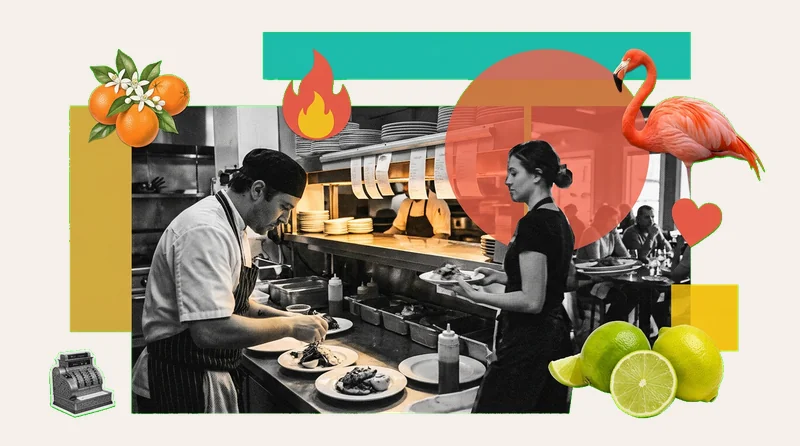
Restaurant marketing in 2026 looks different than it did five years ago. Your customers find you through Google before they find you through word of mouth. They read reviews on three platforms before deciding where to eat. They expect you to answer questions on their phone in the time it takes them to decide between your restaurant and the one next door.
This guide walks you through the modern restaurant marketing playbook. We focus on what actually drives customers through your door: Google Business Profile optimization, food photography that sells, review management, targeted social media, email marketing that builds loyalty, and local partnerships that amplify your reach.

Your Google Business Profile Is Your First Restaurant Marketing Tool
A restaurant's Google Business Profile is not optional marketing. It is your most critical marketing asset. When someone searches "Italian restaurants near me" or "best sushi in [your city]," your Google Business Profile determines whether they see your restaurant, read your hours, check your photos, or call you directly.
Start by claiming and verifying your business profile if you have not already done so. Go to google.com/business and search for your restaurant by name. If it exists, claim ownership. If it does not exist, create it. Verification takes a few days through a postcard sent to your restaurant address. Once verified, you control everything that appears under your business name on Google Maps and in Google Search results.
Complete every field in your profile. Enter your restaurant name, address, phone number, website, business hours, and cuisine categories. This information must be accurate. If your hours are wrong, customers will show up at 11 PM expecting dinner and find a locked door. If your phone number is wrong, they cannot call to make a reservation.
Write a business description that tells potential customers what you offer. Do not write a generic description that could apply to any restaurant. Tell them your story. Are you the only farm-to-table restaurant in your neighborhood? Do you have a chef who trained in Italy? Are you known for your cocktail program? Write 750 characters that explain why someone should choose your restaurant over the options in the area.
Add links to your reservation system, menu, and website in the "Links" section. If you use OpenTable, Resy, or another reservation platform, link to your booking page. If your menu is online, link to it. The faster customers can book a table or see what you serve, the more likely they are to choose you.
Update your profile with fresh photos every week. When a customer searches for your restaurant, they see your photos before they see anything else. Those photos need to make them hungry. We cover food photography in detail below, but understand that your Google Business Profile is the stage where those photos appear first.
Respond to all reviews, both positive and negative. We cover reviews in detail below, but every review that appears on your Google Business Profile deserves a response from you. This tells customers that you pay attention, that you care about their experience, and that you actively manage your reputation.
Food Photography That Drives Reservations
Professional food photography is one of the highest ROI investments a restaurant can make. A beautiful photo of your signature dish appears on Google, on your website, on Instagram, in email marketing, and on your menu. A single photo of a burger or a pasta dish influences thousands of decisions to visit your restaurant or choose the competitor down the street.
Invest in Professional Shoots and Comprehensive Library Building
Professional food photography is different from iPhone photos. A professional photographer understands lighting, composition, and food styling. They know how to make your food look like people want to eat it. They use techniques like steam effects, proper plating angles, and garnish placement to make food feel alive and fresh.
Invest in a professional shoot with a photographer who has restaurant experience. Expect to spend 1,500 to 3,000 dollars for a half-day shoot with 50 to 100 edited final images. That might sound expensive, but those images will work for you for years. Every one of those photos can appear in multiple places and generate thousands of dollars in revenue.
During the shoot, photograph your signature dishes, your appetizers, your desserts, and your drinks. Photograph your restaurant space, your outdoor seating if you have it, and your staff in action. Photograph a finished plate and also a plate being plated. Photograph close-ups and wide shots. The photographer will create a library of images you can use across all your marketing channels.
Deploy Photos Across Channels and Update Regularly
Use these photos strategically. Post them on Google Business Profile consistently. Add them to your website. Post them on Instagram and Facebook. Use them in email marketing to your loyalty program. Use them to train staff on proper plating. Every photo should show your restaurant at its best.
Update your photos regularly. Take new photos seasonally when you introduce new menu items. When you refresh your dining room, take photos of the new look. When you introduce a special, photograph it well and post it within hours. Customers notice when your Google profile shows current, fresh images versus outdated photos from years ago. Current photos signal that you are an active, thriving restaurant.
Review Management and the Reputation You Build
Your reviews are your reputation. A restaurant with 4.8 stars and 200 reviews will generate more customers than a restaurant with 3.2 stars and 20 reviews, even if the second restaurant serves better food. Reviews influence search rankings. Reviews influence customer decisions. Reviews are social proof that you are worth visiting.
Systematize Review Collection at Point of Service
Ask customers for reviews at the right moment. The best time to ask for a review is when customers are happy and sitting at their table. Train your staff to ask customers to review your restaurant on Google. You can train servers to mention it when they bring the check. You can include a QR code at each table that links directly to your Google review page. You can print review request cards and place them in the check folder.
Make the review process easy. A QR code that takes someone directly to your Google review form in seconds is far more effective than asking customers to manually search for your restaurant online. The easier you make it, the more reviews you will collect.
Respond Professionally and Extract Operational Insights
Respond to every review, positive and negative. When someone leaves a five-star review and says "best pasta in the city," respond with appreciation. Thank them for coming in. Acknowledge the specific dish they mentioned. When someone leaves a one-star review and says "our pasta was overcooked and the waiter was rude," respond professionally. Apologize for the negative experience. Offer to make it right with a future visit. Show the reviewer and everyone else reading reviews that you care about their experience and that you take feedback seriously.
Negative reviews often contain valuable information. If multiple customers mention slow service or inconsistent food quality, that is data. Address the underlying issue. Train staff to move faster. Implement kitchen checks to catch plating inconsistencies. Then mention in your review responses that you have made changes based on feedback. This shows you listen and improve.
Monitor Cross-Platform Reputation and Maintain Response Speed
Never respond to a review in anger. If a review is unfair or factually wrong, respond calmly and professionally. Invite the customer to reach out directly to discuss their experience. Most people reading your response are not judging you for the review. They are judging you based on how you respond to the review. A professional, empathetic response builds trust with potential customers who are reading.
Monitor reviews across all platforms. Collect reviews on Google, Facebook, Yelp, and TripAdvisor. Set up alerts so you know when a new review appears. Respond within 24 hours when possible. Quick responses show that you are engaged and responsive.
Social Media Strategy for Restaurants
Most restaurants post sporadically on social media and wonder why they see no results. Social media for restaurants works because of consistency, not occasional content. A restaurant that posts three times per week for 52 weeks builds an engaged audience. A restaurant that posts once a month gets lost in the feed.
Master Consistent Posting Cadence and Behind-the-Scenes Content
Focus on Instagram and Facebook first. These platforms are where your customers spend time. Instagram is visual, which is perfect for a restaurant. Facebook has strong local business features and community engagement tools. TikTok works for some restaurants, but it requires a different skill set and audience. Start with Instagram and Facebook and expand once you have those dialed in.
Post your food photography consistently. Three times per week is a sustainable cadence for most restaurants. Monday through Friday works well. Post in the morning around 7 AM, around noon, and around 5 PM. These times align with when people think about food and decide where to eat. Use the professional photos from your photography shoot. Write captions that tell a story about the dish, the ingredient sourcing, or the chef's inspiration.
Use Instagram Stories to show behind-the-scenes content. Photo Stories of food prep, staff moments, new ingredients arriving, or the kitchen in action build connection with your audience. Stories disappear after 24 hours, so they feel more authentic and less polished than feed posts. Post Stories daily if you can. This keeps your restaurant top of mind.
Build Community Engagement and Strategic Promotion
Engage with your community. Follow local food bloggers, complementary businesses, and regular customers. Like and comment on their posts. When customers tag you in photos of their meal, respond and share their content to your Stories. This builds loyalty and encourages more customers to tag you and post about your restaurant.
Create content around your story and your culture. Post about your Chef Spotlight series where you interview team members. Post about your ingredient sourcing or farm partnerships. Post about community involvement or local charity events you support. Post about new menu items and how they came to be. This content goes beyond just food and builds emotional connection.
Run promotions strategically through social media. Announce happy hour specials, limited-time menu items, or upcoming events on Instagram and Facebook. Use the "Book Now" button on Facebook to drive direct reservations. Use Instagram's Call button so followers can call directly from your profile. Make it easy for people to take action based on what they see.
Use Instagram Reels and TikTok for short video content if you have the capacity. Video content performs well because people stop scrolling to watch. A 15-second video of food being plated, a drink being made, or the energy of your dining room can reach thousands of people. You do not need fancy production. Your phone camera is sufficient. Consistency and authenticity matter more than production quality.
Email Marketing Builds Restaurant Loyalty
Email is one of the highest ROI marketing channels for restaurants. A customer who receives weekly emails about specials, new menu items, and events is more likely to visit frequently. Email costs almost nothing to send, yet generates real revenue in the form of repeat visits.
Build Owned Audience Through Strategic Collection
Start collecting emails at the point of transaction. Add an email signup option to your reservation system. Ask customers for their email when they pay the check. Create a physical signup sheet at your host stand with a QR code that adds people to your email list. Offer an incentive: "Join our email list and get 15% off your next visit."
Build your email list intentionally. Do not buy lists. Do not add people without permission. Your email list is made up of customers who have chosen to hear from you. These are your most valuable customers. Treat them accordingly.
Segment and Personalize for Maximum Engagement
Send weekly emails to your list. Monday or Tuesday is often a good day when people plan their week and think about where to eat. Include one or two specials, highlight a new menu item, announce upcoming events, or share behind-the-scenes content. Keep emails short, 150 to 250 words. Include one clear call to action like "Reserve Now" or "Learn More."
Segment your email list if you can. Send different emails to customers who visit frequently versus those who have not visited in six months. Send different emails to customers interested in happy hour versus those who visit for date nights. Segmentation takes more effort, but it increases open rates and click-through rates significantly.
Use email to announce special events. Host wine dinners, chef collaborations, live music nights, or seasonal menu launches. Email gives you a direct channel to people who have already expressed interest in your restaurant. Email can drive high attendance for these events.
Local Partnerships Amplify Your Reach
Most restaurants compete in isolation. Smart restaurants partner with complementary businesses to expand their reach. A partnership costs nothing and exposes your restaurant to new customer bases.
Identify complementary businesses in your area. If you are a steakhouse, partner with a wine shop, a brewery, a florist, or an event space. Cross-promote with each other. The wine shop recommends your restaurant to customers buying wine. You recommend the wine shop to customers at your table. The florist recommends you for date nights. You recommend them for dining room flowers.
Create bundled offerings with partner businesses. Team up with a brewery for a beer-pairing dinner. Partner with a coffee roaster for a breakfast event. Partner with a cooking school to offer a dinner and cooking class combination. These partnerships create unique experiences that attract customers who might not visit otherwise.
Swap social media shoutouts with partners. Follow each other, like and comment on each other's content, and cross-promote on Stories and Reels. This introduces your restaurant to your partner's followers. It is free marketing with built-in credibility.
Partner with local influencers and food bloggers. Offer them a complimentary meal in exchange for honest coverage on their platform. Food bloggers have engaged audiences interested in dining out. A positive review from a trusted food blogger introduces your restaurant to hundreds of people.
Create a referral program with your staff. Reward servers and hosts who refer their friends to visit the restaurant. Word of mouth from staff is often the most credible and effective referral source. A small reward for referrals that convert to paying customers incentivizes your team to talk about your restaurant when they are off the clock.
Your Restaurant Marketing Plan in Practice
This is how restaurant marketing works in 2026. You optimize your Google Business Profile so customers can find you, book you, and see you are legitimate. You invest in professional food photography that makes people hungry. You collect and respond to reviews so your reputation grows. You post consistently on social media so your restaurant stays top of mind. You email your most loyal customers with specials and events. You partner with complementary businesses to reach new audiences.
None of these tactics are complicated individually. The power comes from doing all of them together consistently. A restaurant that does one or two of these things will see marginal results. A restaurant that implements all of these strategies will see measurable growth in customer visits, revenue per customer, and overall brand strength.
Start with your Google Business Profile if it is not already optimized. That is your highest priority. Then invest in professional food photography. Then implement a system to collect and respond to reviews. Then establish a social media cadence. Then build your email list and send weekly emails. Then create partnerships with complementary businesses.
Do not try to do everything at once. Choose the two tactics where you are weakest and focus there for two weeks. Then add another tactic. Build your restaurant marketing system piece by piece. In six months, you will have a comprehensive marketing engine that drives customer visits and builds your restaurant's reputation in your community.
References and Further Reading
- BrightLocal: Restaurant Marketing Guide — Local search strategies specific to food service
- Google: Manage Your Restaurant Business Profile — Google's official guidance for restaurants
- Instagram: Business Account Features — How to leverage Instagram for restaurants
- Hootsuite: Food and Beverage Social Media Strategies — Best practices for restaurant social media